Lessons learned from the Ingun incident and other serious accidents involving small fishing vessels
How can safety be built when the workplace is confined, operations vary and the crew consists of a single person?
LESSONS LEARNED: Everyday life for a small-scale coastal fisher involves coping with changing conditions and heavy equipment, often in very limited space.
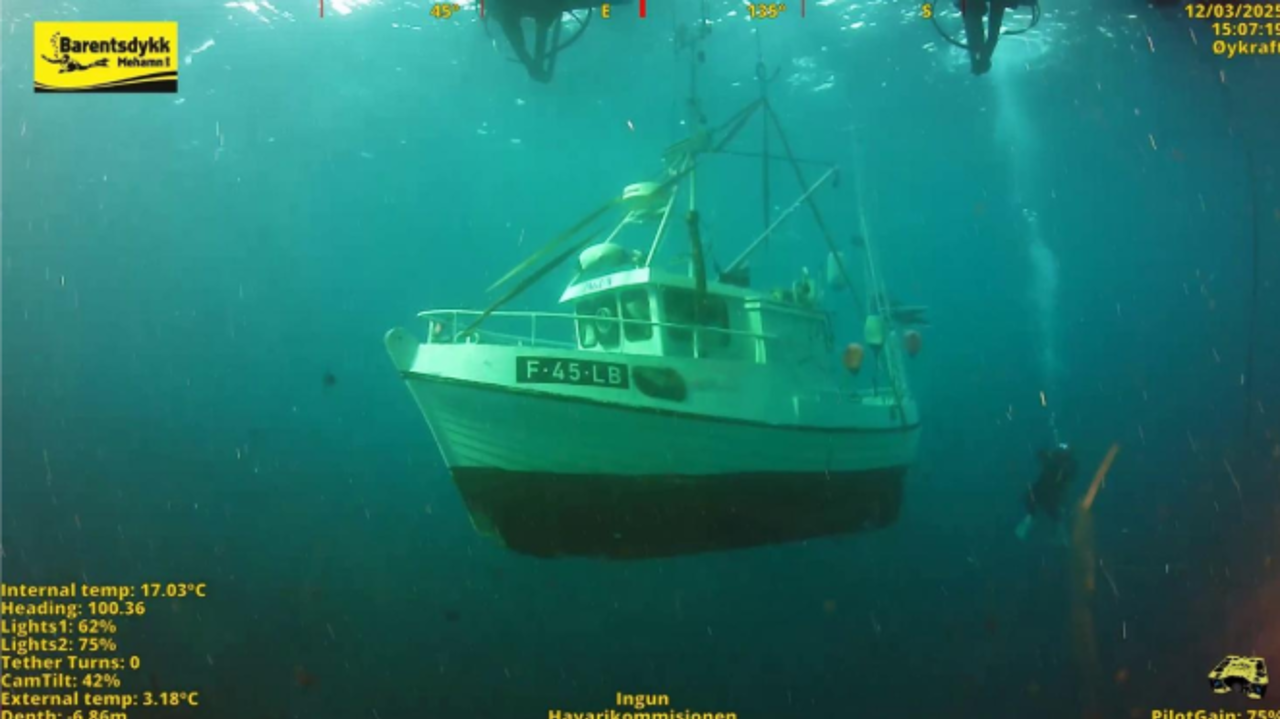
The Norwegian Safety Investigation Authority recently published a report on the marine accident with fall over board from the fishing vessel Ingun in Laksefjorden i Finnmark.
The report shows that the line between a normal working day and a crisis situation can be extremely thin. Even routine operations can have fatal consequences when something goes wrong.
What happened?
On Thursday 20 February 2025, the 7.9-metre fishing vessel Ingun was setting crab pots in Laksefjorden, Finnmark. The fisher was alone on board. It was dark, the air temperature was cold (0–1°C) and the sea temperature was only 3–4°C.
The fisher fell overboard while setting the pots. There were no witnesses to the incident, but the Safety Investigation Authority's findings indicate that the accident occurred as the last string and marker buoy entered the water. The vessel continued on autopilot, maintaining course and speed, for almost two hours before it ran aground and subsequently sank.
The emergency position-indicating radio beacon (EPIRB) mounted on the wheelhouse roof was not activated until the vessel sank, resulting in a delayed start to the rescue operation. The fisher was found deceased more than four hours later, entangled in the rope of the final string of the pots. He was wearing floatation clothing, but did not have a personal locator beacon (PLB) on his body. An engine emergency stop was installed on board, but it was not in use or connected on the day of the accident.
Snagging and entanglement hazards on confined decks
The SINTEF report Sikkerhetstiltak for fiskeflåten (safety measures for the fishing fleet) highlights that snagging and entanglement hazards – meaning clothing or body parts becoming caught in gear, ropes or rotating equipment – as a critical risk, particularly for the smallest vessels.
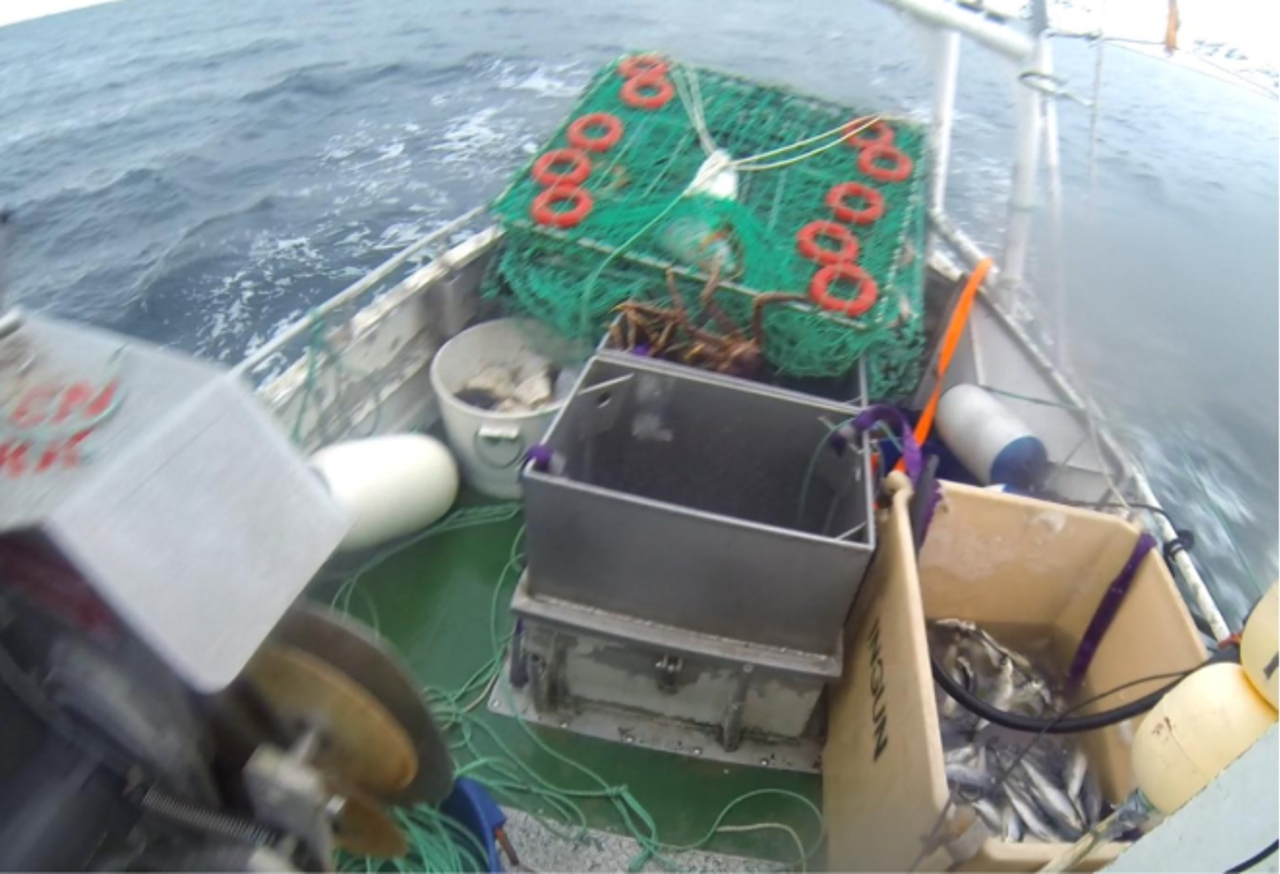
On Ingun, as on many small coastal fishing vessels, space on deck is limited. Many vessels are also modified and change fishing methods throughout the year, for example from gillnets to pots or longlines. This creates particular challenges:
- When new or different equipment i brought on board, deck space is quickly reduced. The accident investigation showed that the fisher had to work in close proximity to coils and rope handling gear during pot setting.
- Changing fishing gear alters the vessel's center of gravity. It is essential that stability calculations accurately reflect the vessel's current configuration.
- Confined working conditions often force the fisher into high-risk zones. A "clean deck" principle, where all the equipment not in use is removed, therefore represents an important safety barrier.
Clear statistical evidence
This incident fits into a serious and well-documented pattern. According to the SINTEF report Personulykker i den norske fiskeflåten (personnel accidents in the Norwegian fishing fleet) 66 per cent of fatal accidents involving fishing vessels occur on vessels of less than 15 metres.
The report highlights falls overboard as one of the most frequent causes of death, and shows that the risk increases significantly when fishing alone. When there is no one else on board to raise the alarm or turn the vessel around, the consequences of a misstep or an equipment-related incident are often fatal. For the small-scale coastal fishing fleet, the risk is particularly associated with handling fishing gear (nets and pots), where the fisher is exposed along the rail.
Life-saving barriers
It is not possible to eliminate all risk in fishing. Waves, slippery decks and unforeseen events will always be part of the working environment at sea. For this reason, it is especially important to focus on consequence-reducing measures – that is measures that can save lives after an accident has occurred. In this case, the rescue operation was initiated only when the vessel sank and the free-floating emergency position-indicating radio beacon (EPIRB) came into contact with water. By then, the fisher had been in the sea for more than two hours.
Below are four factors that every single-handed fisher should take into account:
1. Preventing the fall (preventive measures)
The best rescure is the one that never has to be carried out. On small coastal fishing vessels, the working deck is often confined, and the risk of snagging in fishing gear is high.
The "clean deck" principle: Ensure that ropes, boxes and equipment have fixed and designated places. When converting the vessel from one type of fishery to another (e.g. from gillnets to pots), previous gear must be removed or stowed completely away. A tidy deck significantly reduces the risk of tripping.
Eliminate snagging hazards: Investigations show that many accidents occur because clothing or body parts become caught in rotating machinery or fishing gear passing over the rail. Wear close-fitting workwear without loose straps, and ensure that all moving parts of machinery are properly guarded.
Safety line: A well-designed and properly adjusted safety line is an inexpensive life-saving measure when weather conditions are poor or work must be carried out in exposed positions. The safety line must be rigged in a way that does not obstruct the work – otherwise it is likely not to be used. Many fishers choose to install a wire across the deck, allowing them to move freely while keeping the safety line positioned above hand level.
2. Stopping the vessel (self-rescue)
If you fall into the sea, measures must be in place that allow you to rescue yourself and get back on board. In the Ingun accident, the vessel continued on autopilot for almost two hours. Far too many fishers have experienced watching their vessel disappear towards the horizon, with no one left on board.
Wirekess engine cut-off (dead-man system): Traditional cord-based systems are often left unused because they restrict movement and interfere with work. Modern wireless systems allow full freedom of movement on deck, while shutting down the engine immediately if the fisher falls overboard. This provides a crucial opportunity to swim back to the vessel.
Rescue ladder: Once the vessel has stopped, getting back on board is essential. Cold water causes strength to be lost rapidly. A permanently installed ladder at the stern, which can be deployed from the water if necessary, is a requirement and must be checked regularly.
3. Raising the alarm and being found (rescue)
If you are unable to get back on board, the length of the time you can remain warm and afloat becomes critical. In cold water, loss of swimming ability and conciousness can occur rapidly.
Personal locator beacon (PLB): A traditional emergency position-indicating radio beacon (EPIRB) mounted on the vessel only sends an alert if the vessel sinks – which, in this case, was far too late. A PLB attached to your work vest is your personal distress beacon. It transmits your precise GPS position directly to the Joint Rescue Coordination Centre, reducing search time from hours to minutes.
Flotation clothing: The use of flotation garments or work lifejackets is mandatory when working on exposed decks, and essential for keeping you afloat once the cold shock response sets in. Ensure that your workwear and clothing also contribute to keeping you warm and dry.
4. Learning and risk assessment (planning)
Technical equipment and rescue systems are essential, but planning, learning and sharing experiences are just as critical to working safely. Improving safety on board does not have to be complicated.
Learn from near-misses: Did a rope snag your boot yesterday? Do not just shrug it off. Pause and ask yourself: "Why did this happen, and what can I do to prevent it from happening again tomorrow?"
Learn from others: Read accident investigation reports, such as this one on Ingun, or share experiences with colleagues. Ask yourself: "Could this happen on my vessel?" If the answer is yes, changes must be made before heading out to fish.
Job Safety Analysis (JSA): Before carrying out a work task that you do not perform on a daily basis (e.g. switching from gillnets to pots), take five minutes to assess the risks. Consider the task itself, as well as the placement and configuration of equipment. Where are the pinch points? Where will the ropes run? What happens if I fall at this point?
Summary
The accident involving Ingun was the result of an ordinary work task that developed into a fatal incident within seconds. For single-handed fishers, responsibility fr personal safety is therefore particularly significant.
Systematic review and risk assessment of work operations – and of the conditions and circumstances that can make them safer and more manageable – can save lives. This includes everything from deck housekeeping, vessel stability and maintenance, to carrying a personal locator beacon (PLB) at all times.