Persian Gulf, Strait of Hormuz, Gulf of Oman, The Arabian Sea
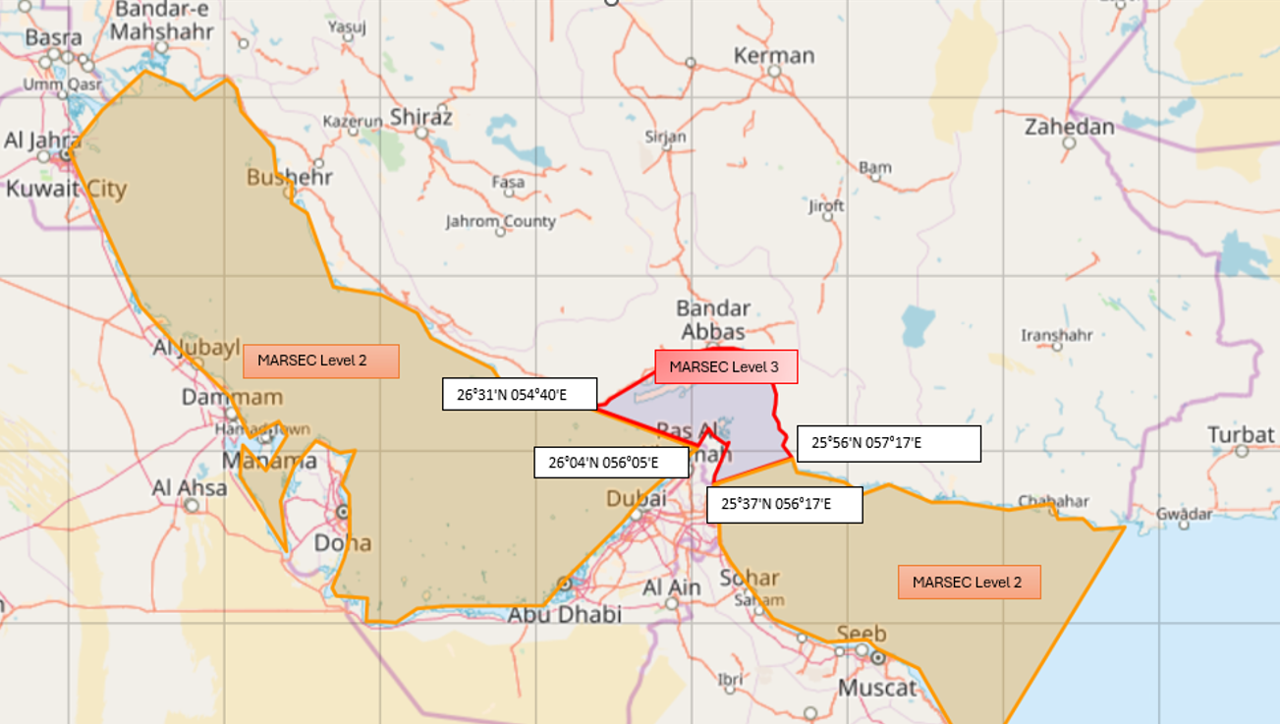
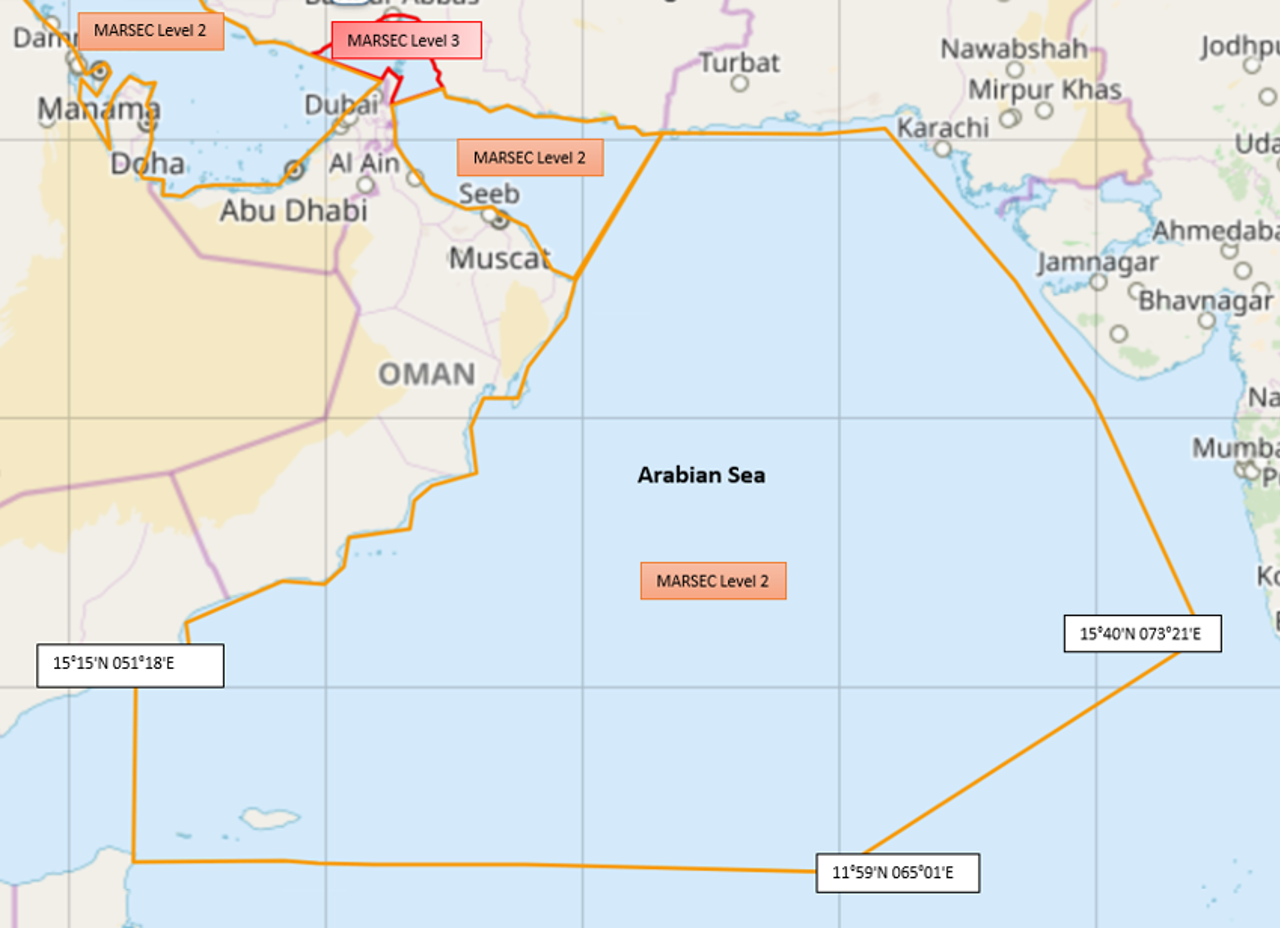
The following ISPS Security Levels have been established for the designated areas and will remain in effect from 26 October 2026 until further notice.
- ISPS Security Level 3 remains in force in the Strait of Hormuz.
- The security level in the Persian Gulf and the Gulf of Oman, including waters east of Muscat, is set at ISPS Security Level 2.
- Security Level 2 remains in force in the northern part of the Arabian Sea.
Security Level 3 is the level at which further specific protective security measures shall be maintained for a limited period of time when a security incident is probable or imminent, although it may not be possible to identify the specific target of the threat (ISPS Code A/2.1.11).
The conflict between Iran and the United States has created a serious and highly unstable security situation in the Persian Gulf, the Strait of Hormuz and the Gulf of Oman. Merchant vessels have repeatedly come under fire, been struck and, in several cases, been sunk. The region remains an active conflict area, although the risk of direct exposure varies considerably between different areas.
The Strait of Hormuz remains the main focal point of the conflict and the area most exposed to direct military action. Vessels operating in or near the Strait should expect an elevated risk associated with military activity, unintended collateral damage and other security incidents.
Significant disruption of GNSS/GPS signals, including jamming and spoofing, continues across large parts of the region. Such interference may reduce the reliability of position data and contribute to AIS anomalies and intermittent loss of navigation and communication signals.
Security Level 3 is the level at which further specific protective security measures shall be maintained for a limited period of time when a security incident is probable or imminent, although it may not be possible to identify the specific target of the threat (ISPS Code A/2.1.11).
Recommended preventive measures:
- Port calls within the areas concerned should continue to be assessed on a case-by-case basis, with particular regard to the port's risk profile. An enhanced and documented risk assessment should be carried out prior to arrival, and the prevailing security situation should be monitored continuously throughout the port call.
- Use BMP Maritime Security as guidance when planning and conducting voyages and operations.
- Ensure that vessels and crews are well prepared through thorough planning, training and regular drills.
- Conduct security risk assessments before transits and operations in the areas and implement appropriate risk-mitigation measures. Threat assessments and transit guidance for the region are produced by UKMTO and EUNAVFOR and are available on the MSCIO website.
- Report to UKMTO and MSCIO in accordance with established procedures.
- Ensure that contingency procedures and arrangements for the loss of GNSS/GPS signals are relevant, up to date and implemented on board in line with the current threat environment.